How DERES Works
A continuous, network-aware decision-support loop that keeps your team ahead of cascade risk — from the first change event to the final governance log.
A living model of your project's actor-network.
DERES is not a static dashboard. It is a continuously updated model of the relationships — human and non-human — that constitute your project. When conditions change, the model changes with them.
The platform ingests structured project data and uses it to populate and maintain an actor-network graph. Each node represents an actor: a person, an organisation, a material, a standard, a community, an ecosystem. Each edge represents a relationship: a contract, a dependency, a regulatory obligation, a physical connection.
When a change is logged, DERES traces its likely propagation pathways and surfaces the actors and stakeholder groups most likely to be affected. The result is anticipatory risk intelligence — not retrospective incident analysis.
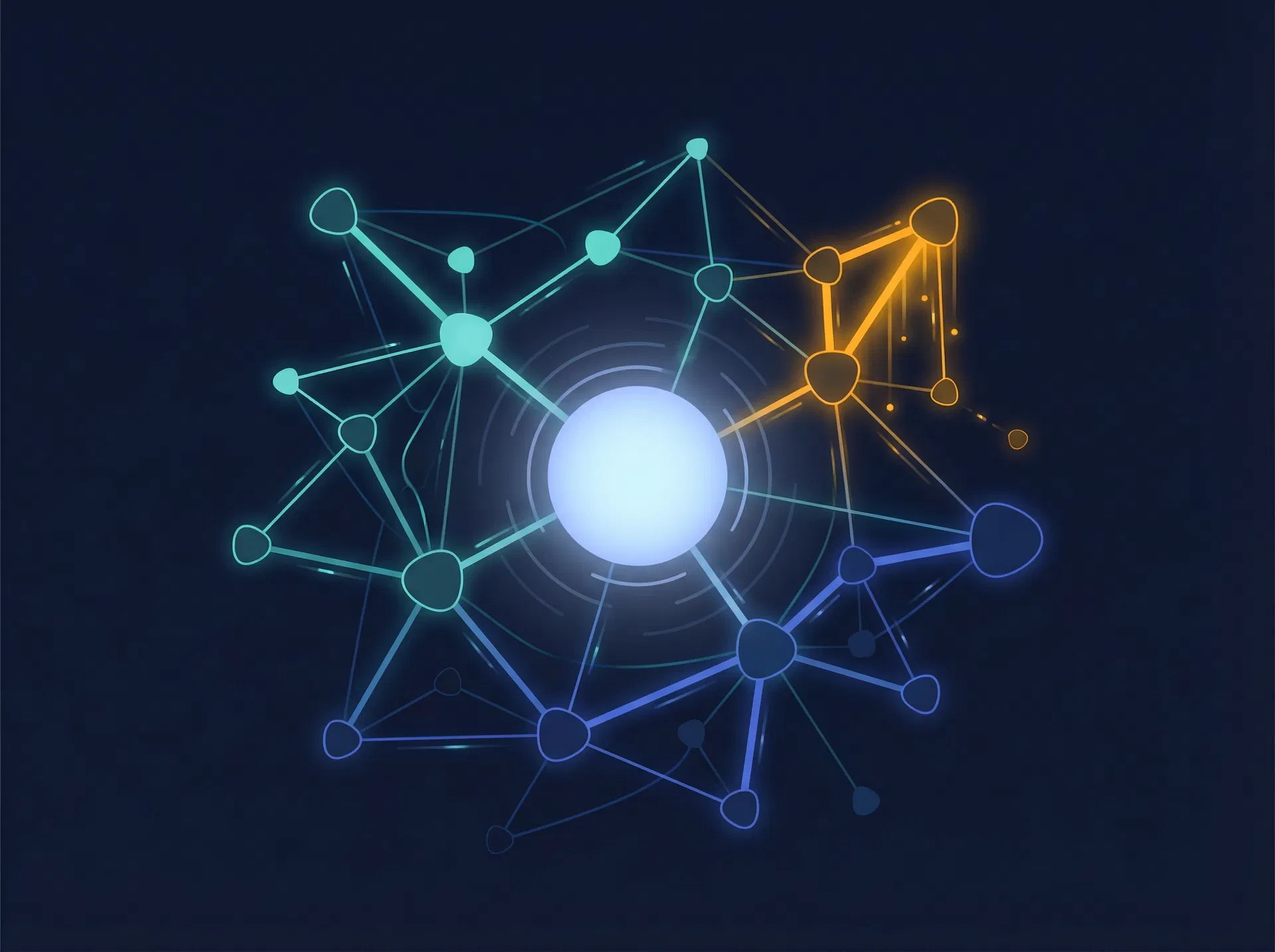
Fig. 1 — Abstract actor-network model. Teal: active actors. Blue: structural links. Amber: risk cascade pathway.
Four steps. Continuous. Auditable.
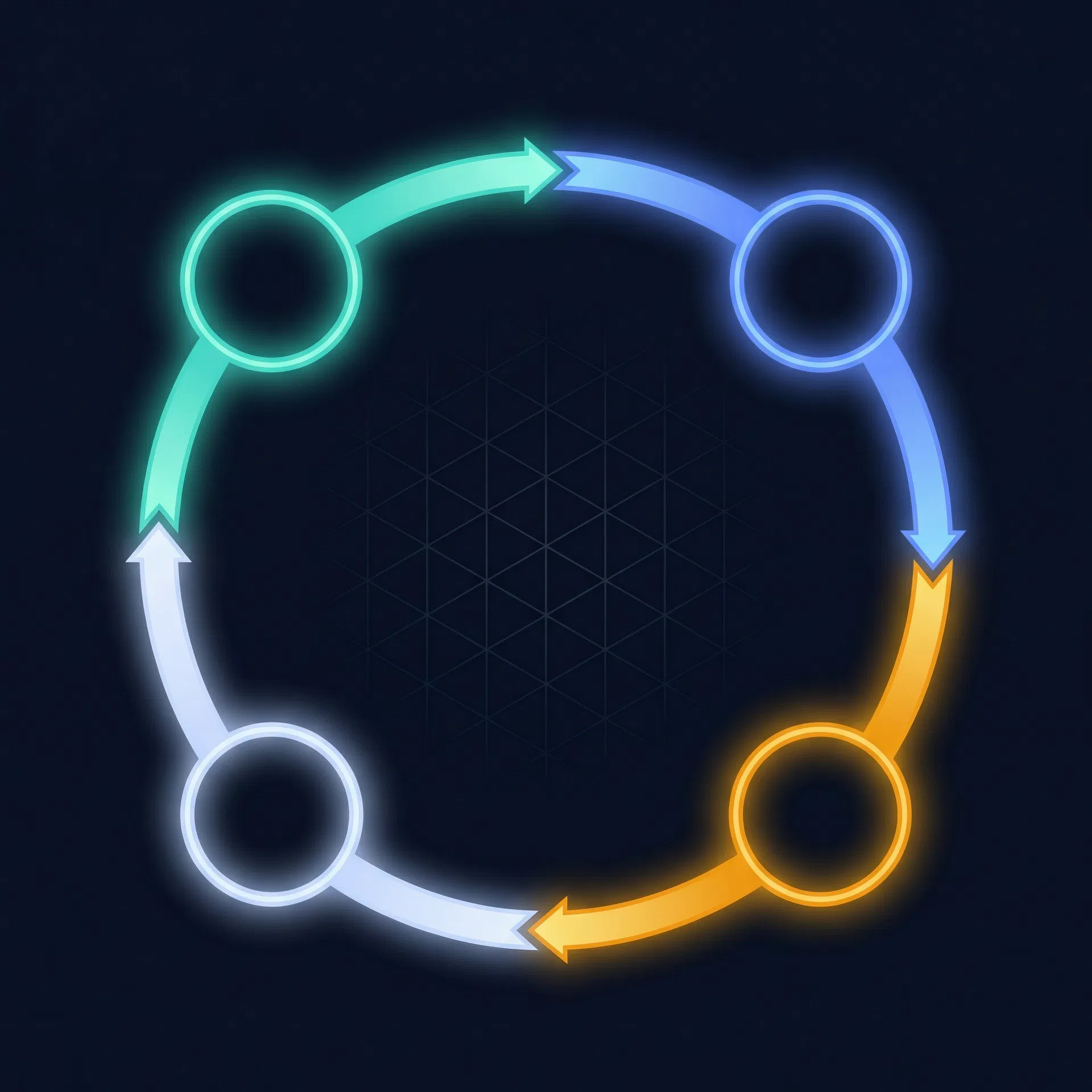
Network Update
A change event is logged — a supplier switch, a design revision, an audit finding, an operational anomaly. The actor-network model ingests the update and marks affected nodes.
Entanglement Recomputation
DERES recalculates entanglement pathways across the full network. It identifies which connections have changed, which actors are now at elevated risk, and how far the cascade could travel.
Intervention Selection
The platform surfaces prioritised intervention options — ranked by cascade severity, stakeholder exposure, and governance obligation. Teams can model the effect of each option before committing.
Decision Logging
Every decision — including the rationale, the actors consulted, and the risks accepted — is recorded in a governance-ready log. This creates an auditable record of responsible decision-making.
Structured project data, connected.
DERES works with the data your project already generates. The platform is designed to integrate with existing project management, quality, and compliance systems — not to replace them.
Data is structured and mapped to the actor-network model during onboarding. As the project progresses, updates flow into the model automatically, keeping the network current.
Six live indicators. Continuously recalculated.
These indicators are not static scores. They are dynamic outputs of the network model — they change as the project changes.
Supplier Transparency
72Measures the traceability and disclosure quality of the supply chain. Low transparency signals elevated cascade risk from hidden dependencies.
Labour Risk
45Tracks indicators of labour vulnerability across the supply network — conditions, contracts, and geographic risk factors.
Community Vulnerability
58Assesses the exposure and adaptive capacity of communities connected to the project network.
Ecological Sensitivity
63Rates the ecological fragility of environments within the project's sphere of influence.
Lifecycle Carbon Intensity
38Tracks embodied and operational carbon across the full project lifecycle, flagging high-intensity pathways.
Circularity Potential
55Evaluates the potential for materials and components to be recovered, reused, or regenerated at end-of-life.
What DERES tells you — and why it matters.
Cascade Route Alerts
When a change is logged, DERES traces the most likely propagation pathways through the network and issues alerts ranked by severity and reach. You see not just the immediate impact, but where the ripple is heading.
WHY IT MATTERS: Conventional risk tools tell you a risk exists. DERES tells you where it's going.
Bridge Actor Identification
Some actors in the network carry disproportionate influence — they connect otherwise separate clusters. DERES identifies these 'bridge actors' so teams can prioritise engagement and monitoring.
WHY IT MATTERS: Bridge actors are often invisible in org charts but critical in practice.
Exposed Stakeholder Groups
DERES maps which stakeholder groups — communities, workers, ecosystems — are positioned in the path of a cascade. This enables proactive engagement rather than reactive damage control.
WHY IT MATTERS: Stakeholders affected last are often harmed most. DERES makes them visible early.
Governance-Ready Decision Logs
Every intervention decision is captured with full context: the network state at the time, the options considered, the rationale applied, and the actors involved. These logs are structured for audit, reporting, and accountability.
WHY IT MATTERS: Accountability requires evidence. DERES builds that evidence automatically.